
Gold‘s attempt at a recovery has once again faded, with the precious metal continuing to slide lower almost perfectly in line with its 50-day moving average. Each rally over recent weeks has been met with renewed selling, reinforcing the current downward trend despite an increasingly uncertain geopolitical backdrop.
Silver continues to prove more resilient, desperately defending support around the US$58 mark. Like gold, however, momentum remains weak. Both metals are now sitting firmly within oversold territory, with their Relative Strength Index (RSI) averaging around 33 out of 100. While this doesn’t guarantee an imminent rebound, it does suggest much of the recent selling pressure may already be priced in. Should geopolitical tensions or inflation expectations intensify, precious metals could be well positioned to respond quickly.
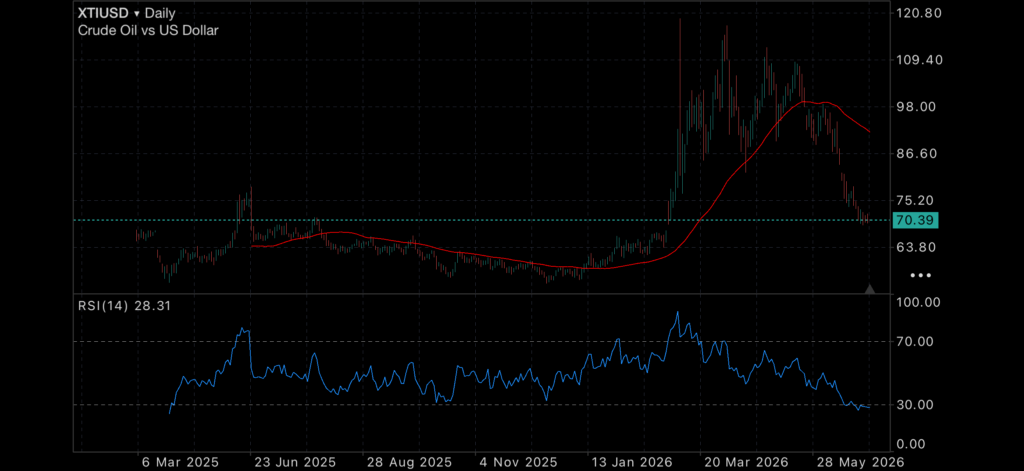
Interestingly, oil is telling a similar story. Prices continue to soften despite renewed fighting between the United States and Iran, leaving crude trading in what many analysts would also consider oversold territory. Markets appear far more concerned about slowing global demand than potential supply disruptions, although history has shown that sentiment can reverse rapidly if conflict begins affecting production or shipping through the Middle East.
Oil pricing over the past 16 months. Extreme Volatility shown since February 2026.
Economic data continues to send mixed signals. US inflation has now climbed back above 4% year-on-year, a level that would normally unsettle investors and strengthen demand for defensive assets such as gold. Instead, consumer spending remains surprisingly robust, with households continuing to spend despite higher prices across much of the economy. Equity markets have largely interpreted this resilience as a positive, although the persistence of inflation suggests central banks may have less flexibility to reduce interest rates than many investors currently expect.
Corporate earnings are also beginning to reflect the first meaningful financial benefits from artificial intelligence. Companies across multiple industries are reporting improved productivity and operational efficiencies as AI becomes embedded into day-to-day operations. The next challenge, however, will be proving that those efficiencies translate into genuine revenue growth. With AI infrastructure requiring significant investment in hardware, software and energy, investors will increasingly judge businesses on whether AI can produce sustainable profits rather than simply lower operating costs.
At first glance, higher inflation should be bad news for financial markets. Rising prices often lead to higher interest rates, increasing borrowing costs for both consumers and businesses. In reality, markets trade on expectations rather than today’s headlines. If investors believe companies can continue growing earnings despite higher inflation or that inflation will eventually moderate they may continue buying shares. This is why markets sometimes rally even while economic data appears to deteriorate. Over time, however, company profits ultimately need to justify that optimism. If earnings fail to keep pace with inflation and higher costs, markets often adjust quickly.