

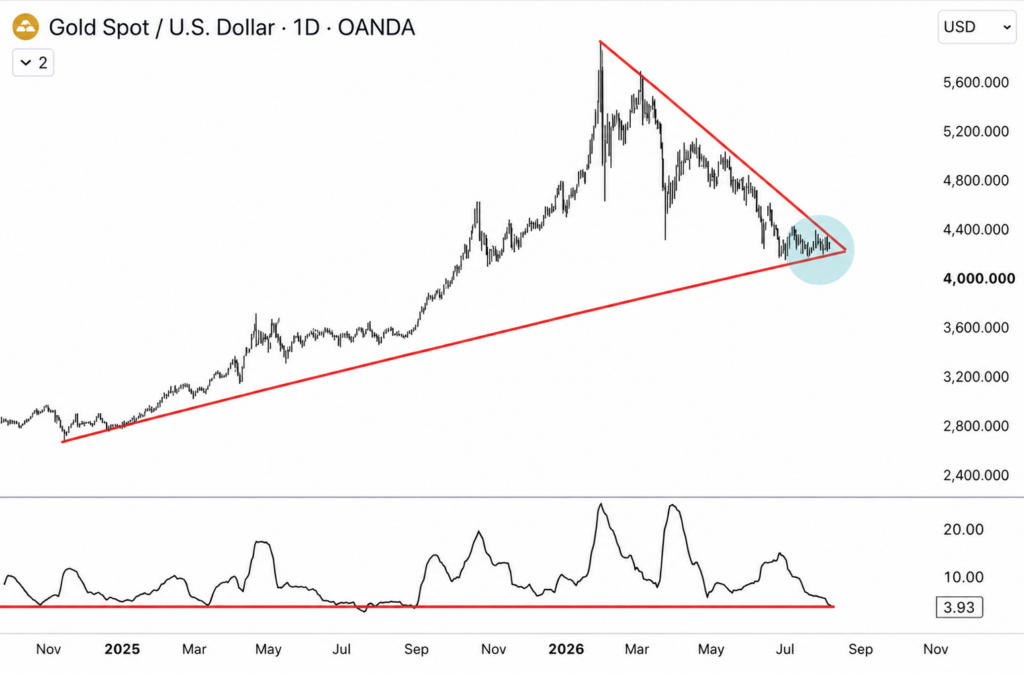
Gold finally broke free on Wednesday, surging almost US$200 in its strongest daily performance since February. The move pushed gold decisively through its 50-day moving average and above the downward trend that had constrained pricing since early March, providing the first genuinely bullish technical signal we have seen in months.
As today’s chart below shows, gold has been heavily compressed since reaching its January peak. Each attempted recovery has struggled to generate enough momentum to overcome the persistent selling pressure, leaving the metal trapped within an increasingly narrow range. Wednesday’s breakout changed that picture. Gold moved through several resistance levels in a single session, while improving momentum and stronger buying volumes added credibility to the rally.
The catalyst was growing optimism that the United States and Iran may be moving closer to an agreement over the Strait of Hormuz. Iran and Oman have been involved in discussions aimed at restoring commercial shipping through the Strait, raising hopes that one of the largest disruptions to global energy markets could finally begin to ease. Around one-fifth of global oil and LNG flows normally pass through Hormuz, making any credible reopening agreement significant for energy prices, inflation and global economic confidence.
Perhaps surprisingly, gold rose alongside the S&P 500 and ASX 200 as markets embraced the possibility of an agreement. Normally, easing geopolitical tension could reduce demand for defensive assets. This time, however, falling energy prices reduced inflation expectations and lowered the perceived likelihood of further US interest rate rises. Lower interest-rate expectations are generally supportive of gold because they reduce the opportunity cost of holding an asset that does not pay interest.
The ASX 200 also pushed to a fresh record, supported by stronger gold miners, materials companies and improving investor sentiment. US shares joined the rally as investors welcomed the possibility of lower energy costs and fewer inflationary pressures flowing through the global economy.
The important question is whether an agreement will actually be delivered. Doubts have already resurfaced, with an Iranian parliamentary committee reportedly considering restrictions on US, Israeli and other so-called hostile vessels passing through Hormuz. Oil prices subsequently rebounded, demonstrating how quickly market sentiment can change while negotiations remain unresolved.
Gold’s breakout is therefore encouraging, but it still needs confirmation. Holding above the 50-day moving average would strengthen the case that the long period of compression is ending. A retreat beneath it would suggest Wednesday’s surge was another temporary reaction to geopolitical headlines. For now, however, the balance has shifted, and the gold market is looking noticeably more bullish than it did only a few days ago.
Gold is often described as a safe-haven asset, which can create the expectation that it must fall whenever geopolitical conditions improve. In practice, gold responds to several forces simultaneously, including inflation, interest rates, the US dollar, central-bank demand and investor positioning.
A Hormuz agreement could allow more oil and gas to move through global markets, reducing energy prices and some of the inflationary pressure facing households and businesses. If inflation expectations ease, central banks may have less reason to raise interest rates. This is particularly important for gold because higher rates make interest-paying assets such as bonds and term deposits more attractive, while lower rate expectations improve gold’s relative appeal.
Wednesday’s rally therefore reflected more than the prospect of peace. Markets were pricing in the possibility of lower oil prices, softer inflation and fewer US rate increases. That combination can support shares and gold at the same time, even though the two assets are often assumed to move in opposite directions. Gold’s reaction is a useful reminder that geopolitical headlines matter, but the inflation and interest-rate consequences behind those headlines can matter even more.