


But looking beyond the headline figure reveals something particularly concerning. Much of the pressure is coming from the things Australians need to survive, rather than an economy enjoying excessive discretionary spending.
The latest figures show just how widespread these increases have become:
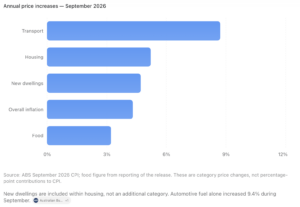
New dwellings are included within housing, not an additional category. Automotive fuel alone increased 9.4% during September.
Housing was the largest contributor to annual inflation, with electricity and new home construction costs pushing prices higher. Transport followed, as international oil prices flowed through to Australian petrol stations, while food prices continued to place pressure on household grocery budgets.
And this is where Australia’s inflation problem becomes particularly difficult. Families cannot simply stop paying rent, buying groceries, using electricity or driving to work. These are necessities, and when their prices increase, households have little choice but to absorb the additional costs by cutting spending elsewhere.
The RBA’s traditional response is to raise interest rates, making borrowing more expensive and encouraging households and businesses to spend less. This can be effective when inflation is being driven by excessive demand, but higher mortgage repayments do little to directly reduce global oil prices, build additional housing or increase electricity supply.
There is another complication. Higher borrowing costs can also make new housing developments less financially attractive, potentially restricting construction at a time when Australia desperately needs more homes. Businesses facing higher finance and transport costs may also pass some of those expenses through to customers.
None of this means interest rates are ineffective. The RBA still needs to prevent temporary price shocks from becoming entrenched across wages and the wider economy, particularly with underlying inflation remaining stubbornly high. However, monetary policy alone cannot address every supply constraint, and the latest figures suggest Australia needs a broader response involving housing supply, energy costs, productivity and careful management of public spending.
For households already struggling with the cost of living, another rate rise risks adding pressure without immediately addressing the bills responsible for much of their financial stress.
Meanwhile, persistent inflation and uncertainty around the direction of interest rates continue to make gold and silver relevant to investors concerned about the long-term purchasing power of their money. Although higher interest rates can weigh on precious metals, the combination of elevated inflation, economic uncertainty and weakening household finances provides a reminder of why investors continue to consider tangible assets.
Economists generally distinguish between demand-pull inflation, where spending exceeds the economy’s capacity to supply goods and services, and cost-push inflation, where production, energy, transport or supply constraints make goods more expensive.
Interest rate increases primarily work by reducing demand. They cannot directly increase the supply of oil, electricity or housing, although weaker spending can eventually limit how much businesses can raise prices.
The challenge for the RBA is finding a balance between controlling inflation and avoiding unnecessary economic damage, particularly when Australians are already spending a significant portion of their income on essentials.
Disclosure: This article is provided for general information and educational purposes only and does not constitute financial advice. Markets can move quickly and past performance is not a reliable indicator of future results. Always conduct your own research and consider your personal circumstances before making investment decisions.