
Ceasefire hopes in the Middle East have taken a clear step backward, with talks between the US and Iran breaking down over the weekend. What initially looked like a pathway to de-escalation is now feeling far more uncertain. Reports suggest Pakistan’s role as a mediator may not have been as impartial as first thought, particularly with signs of support being directed toward Saudi Arabia. At the same time, concerns remain around unaccounted Iranian sea mine placements, which continue to cast a shadow over key shipping routes.
The situation has also shifted on the water, with the US now moving to restrict Iranian maritime activity. The US Navy has been tasked with intercepting vessels entering or leaving Iranian ports, tightening control around the Strait of Hormuz, one of the most important pathways for global oil supply. It’s a meaningful step that goes beyond posturing, as it directly affects how easily energy and goods can move through the region, and markets tend to react quickly when that flow is under pressure. With a large portion of the world’s oil passing through this corridor, even the risk of disruption is enough to keep prices elevated and uncertainty in place.
For markets more broadly, this creates a difficult backdrop to navigate. Energy sits at the centre of it all, and when supply becomes uncertain, the ripple effects tend to show up quickly in the cost of living and business activity. We are seeing that familiar pattern again, where ongoing tension quietly supports commodity prices, even while other parts of the market try to settle.
In Europe, a political shift is also underway. Viktor Orbán has been voted out after 16 years in power, marking a change in direction for Hungary. Moves like this don’t just stay local, they often influence how countries position themselves within the European Union and how they approach spending, energy, and trade. It’s another layer for markets to keep an eye on at a time when stability is already in short supply.
Gold continues to build on its recent recovery and is now pushing toward its 50-day moving average (image/chart shown below). This level often acts as a bit of a checkpoint for the market. A move through it can signal improving confidence, while hesitation around it can slow things down.
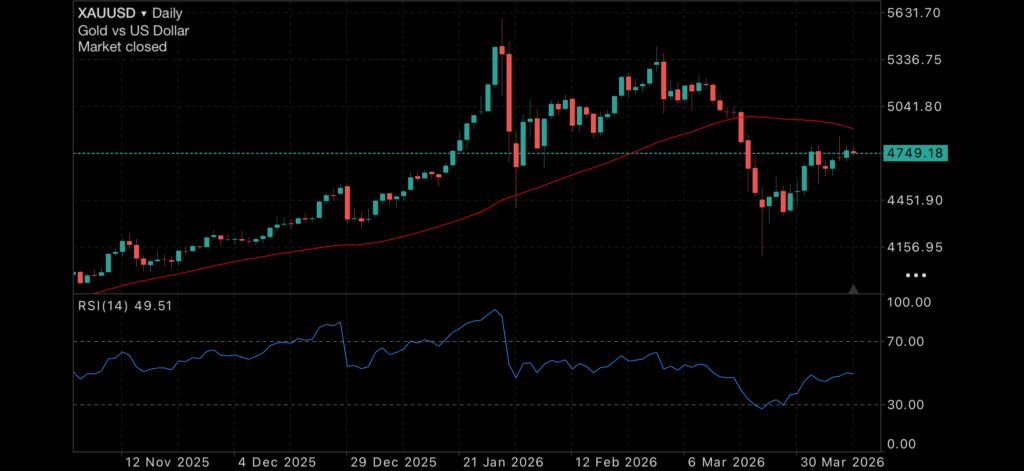
What’s worth noting is how gold has been moving. The recovery hasn’t been rushed or overly reactive, instead it’s been relatively steady, which usually suggests a more consistent level of demand sitting underneath the market. If current tensions remain unresolved and energy markets stay tight, gold may continue to find support as the weeks unfold.
Pakistan often sits in a unique position when it comes to international negotiations, with ties across the Middle East and Asia that allow it to step in as a go-between. That can be helpful in opening dialogue, but it also means its role is closely scrutinised. If either side feels the mediator is leaning too far one way, trust can erode quickly and talks can stall, which is exactly what we may be seeing here. When diplomacy struggles to gain traction, conflicts tend to drag on longer than expected, and that extended uncertainty is what markets tend to react to most, particularly when energy and trade routes are involved.