

Treasurer Jim Chalmers continues to warn Australians that the economic outlook is set to worsen, with unemployment rising, inflation proving stubborn and the Reserve Bank facing an increasingly difficult balancing act. For households already dealing with expensive mortgages, higher fuel prices and a cost-of-living crisis that seems to have no end in sight, the prospect of further economic pain is hardly welcome news.
And while the Treasurer continues to outline the challenges ahead, the bond market is quietly telling a story of its own. Government bond yields remain an important indicator of where investors believe interest rates, inflation and government borrowing costs are heading. With Australian government debt exceeding $1 trillion, refinancing existing borrowings at higher interest rates is becoming an increasingly expensive exercise. Interest payments are already forecast to approach $30 billion this financial year, with that bill expected to grow considerably over the coming years.
It’s worth remembering that governments don’t simply pay off their debts like a household might pay down a mortgage. Much of that debt is continually refinanced, meaning higher bond yields can gradually make the cost of servicing existing obligations considerably more expensive. And with the Australian economy already struggling to find momentum, the last thing we need is more pressure on government finances, businesses and households alike.
For Australians, the implications are fairly straightforward. Higher borrowing costs can flow through to mortgages, business loans and ultimately the prices we pay for goods and services. The RBA is attempting to bring inflation under control, but with unemployment rising and economic growth looking increasingly fragile, there is a genuine risk that the cure becomes almost as painful as the problem.
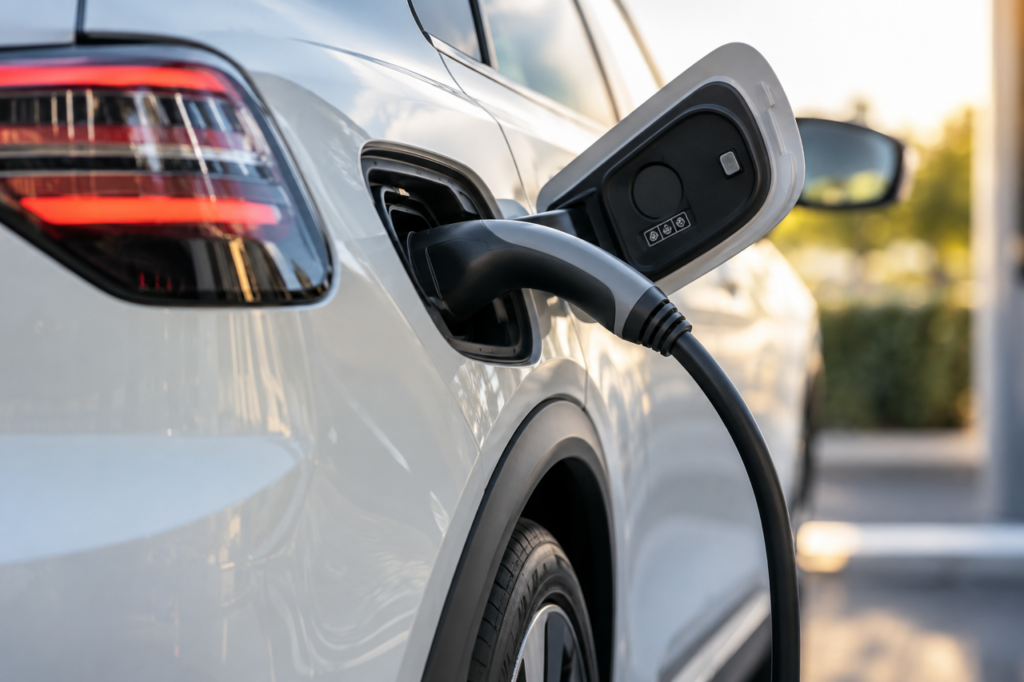
Thankfully, not all the news is gloomy. In a rather encouraging development, almost one in every two new vehicles sold in Australia during September was electrified, with hybrids, plug-in hybrids and fully electric vehicles accounting for approximately 49.8% of sales. That’s a remarkable change in purchasing behaviour, particularly for a country that has historically been so heavily dependent on petrol and diesel vehicles.
Now, before we get too carried away, that doesn’t mean half of all new cars are fully electric. Conventional hybrids still make up a substantial portion of those sales, and Australia’s charging infrastructure has plenty of catching up to do. Nevertheless, the direction is encouraging, particularly given the ongoing volatility in global oil markets and the impact that expensive imported fuel continues to have on Australian inflation.
There’s a rather interesting economic benefit here too. Australia remains heavily reliant on imported refined fuels, leaving motorists and businesses exposed to international oil prices, shipping disruptions and movements in the Australian dollar. As more vehicles transition towards electricity, even through hybrid technology in the shorter term, we begin reducing some of that exposure. Fully electric vehicles offer the greatest opportunity to move away from imported petrol and diesel altogether, particularly when powered by domestically generated electricity.
For gold and silver, the picture remains complicated. Rising bond yields can create headwinds for precious metals, as investors are offered better returns from interest-bearing assets. However, when those yields are rising because of concerns surrounding government debt, persistent inflation or financial instability, gold can become increasingly attractive as a defensive asset.
And that’s perhaps where Australia’s current economic position becomes particularly interesting. We’re facing weaker growth, higher borrowing costs and stubborn inflation, while households have already spent several years absorbing a steady erosion of their purchasing power. The bond market is worth watching closely over the coming months, because it may provide some of the earliest clues as to whether the next chapter involves economic recovery or another round of financial pressure.
At least on the roads, Australians appear to be making some genuine progress towards a future that’s a little less dependent on the price of a barrel of oil.
Government bonds are effectively loans made by investors to governments, with interest paid in return. When investors demand higher returns for lending their money, bond yields rise, while the market value of existing bonds generally falls.
For gold investors, the relationship is particularly interesting. Gold doesn’t pay interest, so when government bonds offer attractive returns, investors may be less inclined to hold precious metals. This is especially true when inflation is falling and confidence in the broader economy remains strong.
However, rising yields don’t always mean bad news for gold. If investors are demanding higher returns because they’re worried about government debt, persistent inflation or financial instability, gold can attract demand as an alternative store of value. The important distinction is between nominal bond yields and real yields, which account for expected inflation. A bond paying 5% might sound attractive, but if inflation is running at 4%, the expected real return is considerably less impressive.
This is why gold investors should pay attention not just to where bond yields are heading, but why they’re moving in the first place.
Disclosure: This article is provided for general information and educational purposes only and does not constitute financial advice. Markets can move quickly and past performance is not a reliable indicator of future results. Always conduct your own research and consider your personal circumstances before making investment decisions.